SEG replaced all 16 Type AC RCBOs on a 10-year-old Legrand switchboard in North Kellyville before the homeowner’s solar panels and battery went in. The job covered 15 single-phase and one three-phase device, was priced at $1,870 + GST, and we allowed one to two hours on site. Type AC devices can no longer be installed under AS/NZS 3000:2018 Amendment 2, and a solar and battery install is usually the moment the question comes up.
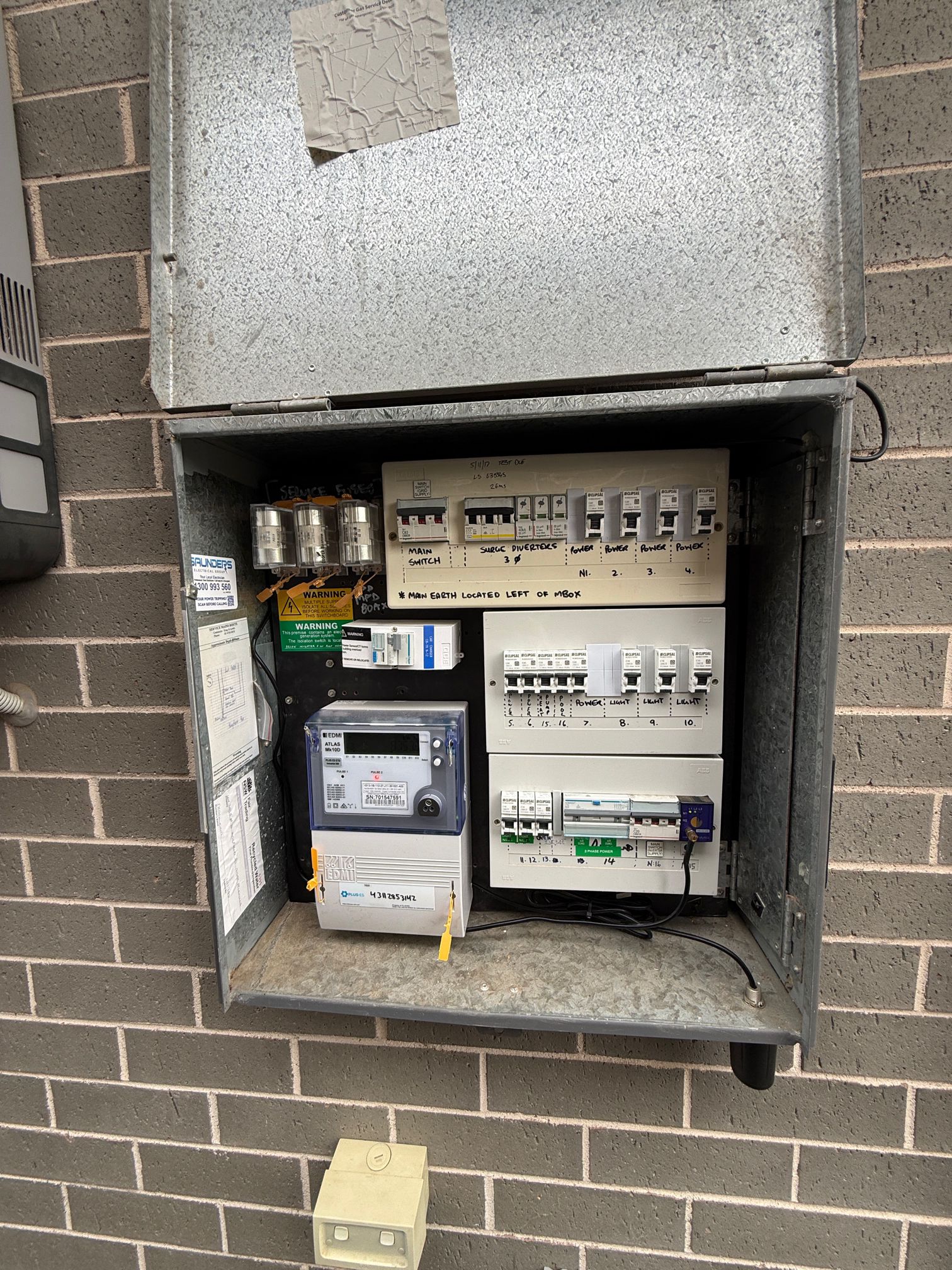
What we found on the North Kellyville board
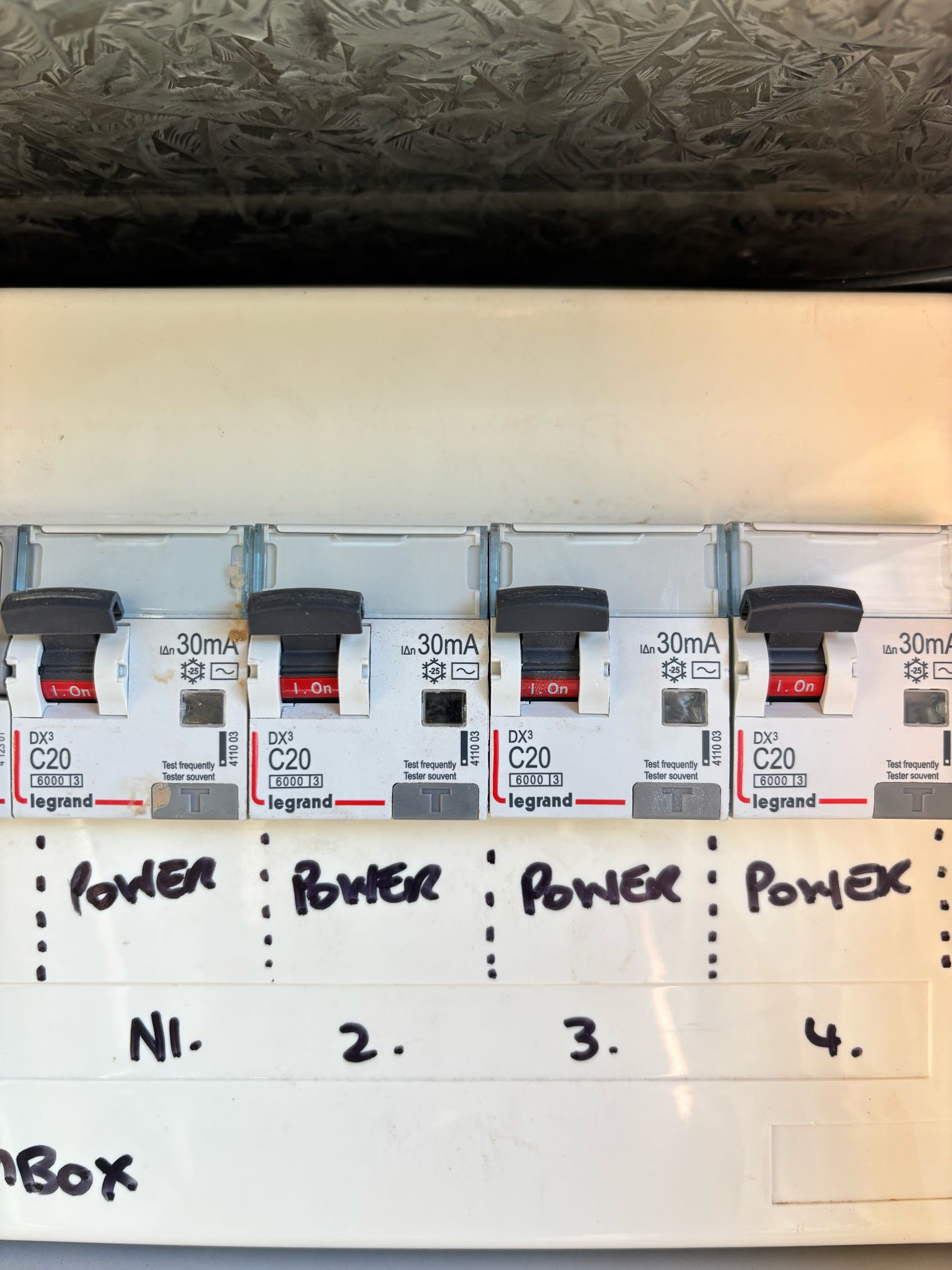
The board was only about 10 years old, and every RCBO on it was a Legrand Type AC. There was nothing wrong with the board or the brand. Type AC was a normal, compliant choice when it went in. The wiring rules changed afterwards.
The homeowner’s solar and battery company flagged the Type AC devices and advised him to upgrade them. He asked us to change every circuit to Type A, so we replaced all 16 in one visit: 15 single phase and one three phase. None of the old units failed or behaved oddly. The reason to change them was what they can’t detect, not a fault we found.
Why Type AC RCBOs are a problem next to solar and a battery
A Type AC RCBO is designed to detect ordinary alternating-current earth leakage. Solar inverters, battery systems, EV chargers, LED drivers and DC ceiling fans all convert AC to DC internally, and a fault in that electronics can leak a pulsating DC current. Building Commission NSW’s compliance note says a Type AC device may fail to trip in that situation, and that DC leakage can saturate the device’s current transformer and stop it detecting even a normal AC fault.
A Type A RCBO detects both AC and pulsating DC earth leakage. That is why Type A is the replacement the regulators point to.
Did the homeowner have to replace all 16?
Not automatically. The regulators’ advisory notes say existing Type AC devices that were installed and certified before 1 May 2023 do not have to be replaced. What changes is when you alter the installation. NSW treats adding an alternative supply, such as a battery, as an alteration, and its guidance says a Type AC device in that arrangement does not meet clause 2.6.2.2.2 of the Wiring Rules.
Which circuits a battery strictly affects depends on how it is connected. On this job the homeowner asked for every circuit to be Type A, so the whole board was done in one visit. Regulators are also enforcing the rule: the NSW compliance note reports more than $20,000 in fines for breaches of this clause.
What a Type AC RCBO replacement cost on this job
The North Kellyville job was priced at $1,870 + GST for 16 RCBOs (15 single phase, one three phase), and we allowed one to two hours on site. Your price will depend on how many circuits you have, the make and fit of your board, and whether anything else needs attention once the board door is open.
What we do when we find Type AC RCBOs
“Installing Type AC RCBOs is now illegal. Whenever we come across a switchboard with Type AC RCBOs, we always recommend upgrading them to Type A, especially with so many homes using modern appliances or DC ceiling fans, which Type AC RCBOs do not fully protect against. For us, it’s about educating our customers about a safety hazard they may not be aware of, and letting them decide what they want to do.”
— Oliver Saunders, Saunders Electrical Group
Because we recommend it whenever we find them, it comes up on switchboard upgrades, ceiling fan installations and EV charger installations, anywhere we’re working at the board.
How to check your own board
Open the switchboard door and read the type marking printed on the front of each RCBO or safety switch. Type AC and Type A carry different symbols, and the manufacturer’s data sheet for your model will confirm which is which. If you can’t tell, ask a licensed electrician to read the board for you before your solar or battery installer’s date.
Common questions about Type AC RCBO replacement
Do I have to replace Type AC RCBOs on my switchboard?
Not automatically. Regulator advisory notes say existing Type AC devices installed and certified before 1 May 2023 do not have to be replaced. New installations and alterations are different: Type AC devices must not be installed from 1 May 2023, and NSW treats adding a battery as an alteration. Saunders Electrical Group recommends upgrading to Type A whenever it finds Type AC RCBOs and lets the homeowner decide.
How much does it cost to replace Type AC RCBOs with Type A?
On a recent North Kellyville job, replacing 15 single-phase and one three-phase Type AC RCBOs with Type A was priced at $1,870 + GST, with one to two hours allowed on site. Pricing depends on the number of circuits and the make and condition of your switchboard.
How do I know if my RCBOs are Type AC or Type A?
Read the type marking printed on the front of each RCBO or safety switch. Type AC and Type A carry different symbols, and the manufacturer’s data sheet for your model confirms which is which. If you are unsure, ask a licensed electrician to check the board before solar or battery work starts.
Does a solar battery need Type A RCBOs?
NSW treats adding a battery as an alteration to the installation, and its guidance says a Type AC device in that arrangement does not meet clause 2.6.2.2.2 of AS/NZS 3000:2018. Which circuits are affected depends on how the battery is connected, so the installer or electrician should assess the board before the battery goes in.
Planning solar, a battery or an EV charger? Have your board assessed first. See our switchboard upgrade service.
Sources
- Building Commission NSW: Residual Current Device (RCD) compliance
- Building Commission NSW: RCD protection in battery energy storage systems
- ERAC Advisory Note: Type A RCDs, AS/NZS 3000:2018 Amendment 2
Written by Oliver Saunders, Saunders Electrical Group. NSW Contractor Licence 344815C.